
Product Spotlight: Short Colored Pencils – A Safer, Smarter Choice for Creative Therapy
Creative expression plays an important role in healthcare settings, supporting emotional regulation, communication, and engagement across a wide range of therapeutic interventions. However, in clinical and mental health environments, traditional stationery items can present safety concerns.
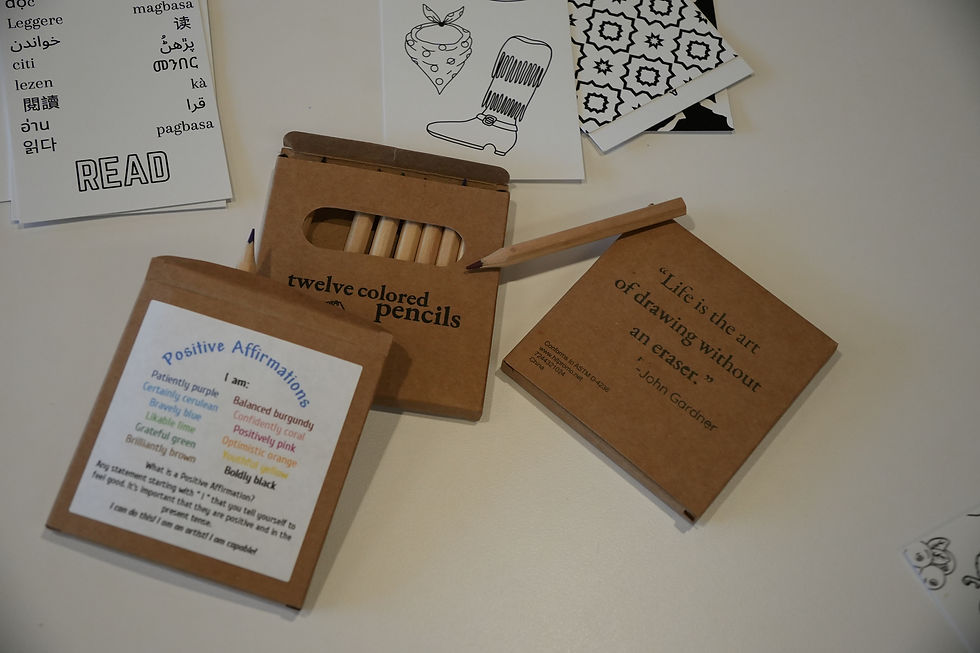
Short colored pencils offer a carefully considered alternative, balancing creative freedom without compromising safety. Designed with psych-safe principles in mind, these pencils are particularly well suited for use in mental health units, behavioral health services, disability support programs, and supervised care environments.
The Safety Advantage of a Shorter Design
One of the key safety benefits of short colored pencils is in their reduced length, which directly impacts how force is applied during use. From a mechanical perspective, shorter pencils experience less torque when pressure is applied.
Torque is the rotational force that increases as the length of an object increases. Longer pencils act as a larger lever, meaning that when bent or pressed, more force is concentrated at a single point. This makes them more likely to snap under pressure. When breakage occurs, sharp fragments can pose a risk of injury.
Short colored pencils, by contrast, have a smaller lever arm, resulting in lower torque during bending or gripping. This makes them less likely to break, even when subjected to excessive force. For healthcare providers, this translates to a reduced risk of sharp edges, splintering, and unintended harm during therapeutic activities.

Supporting Safer Creative Expression
Art-based activities promote emotional expression, stress reduction, and therapeutic rapport. Short colored pencils allow clients to participate in these activities in a way that aligns with safety.
Their compact design:
Limits the ability to apply high-impact force
Reduces the likelihood of use as a weapon or tool for self-harm
Supports controlled, intentional movement during drawing or coloring
This makes them an ideal option for environments where close supervision is required but meaningful engagement remains a priority.
Therapeutic and Functional Benefits
Beyond safety, short colored pencils offer practical benefits that enhance therapeutic outcomes. Their size naturally encourages a controlled grip, which can support fine motor development and hand strength. This is particularly beneficial in occupational therapy, rehabilitation, and aged care settings.
Bright, varied colors help:
Encourage engagement and motivation
Support cognitive stimulation and visual discrimination
Enable non-verbal communication through color choice
For individuals who may feel overwhelmed by complex tasks, coloring with short pencils provides a structured, calming activity that can be easily adapted to different ability levels.
Furthermore, our positive affirmation design is the perfect carryover of how to perform positive affirmations in a to-go package after groups!

Practical for Clinical Environments
Healthcare providers need tools that integrate seamlessly into daily practice. Short colored pencils are designed for high-use clinical settings, offering durability and ease of maintenance.
They are:
Easy to clean and manage, supporting infection control standards
Less prone to breakage, reducing the need for frequent replacement
Compact and easy to store, ideal for therapy kits and activity carts
Their simplicity allows staff to focus on therapeutic engagement rather than constant risk management.
A Thoughtful Choice for Safer Care
Short colored pencils demonstrate how small design choices can have a significant impact on safety and therapeutic effectiveness. By reducing torque and breakage risk, they provide healthcare providers with a reliable, low-risk creative tool that supports expression without compromising care standards.
Available from PsychSafeSupplies, Short Colored Pencils are a practical, evidence-informed addition to any healthcare setting where safety, dignity, and creativity must work hand in hand.


Comments